Showing posts with label travel. Show all posts

Wednesday, August 27, 2014

one year later

In one week it will be one year since Mestre Acordeon, Mestra Suelly and the B2B crew left Berkeley, California for Salvador, Bahia. Clean chains reflected the California sun. Way too much gear made their bikes heavy. Muscles screamed, not accustomed to the daily strain. They thought it would be a long journey but they did not know what it meant to be on the road for over a year. Wet behind the ears, yet eyes brimming with hopes and dreams.


Today, 120 km from Recife and 1000 km from Salvador anyone who takes a minute to look – and many can’t help but do - knows the B2B crew carries with them the hardships of a road less traveled. Long distance riders in the Americas stick to the coasts, avoiding the mountains in the center, but B2B had to cross the central mountain ranges of Mexico, Central and South America several times. Try riding up and down two to six thousand meters of steep, badly maintained mountain roads six times in five months and you will know what these road warriors went through. But up there on those high plateaus is where the cities are, where the capoeira is. And this is a capoeira journey.

They slept in strange places - fields, gas stations, ice cream parlors, on roofs, in really cramped quarters and restaurants or fire stations. They rode in any condition that this good green earth can possible throw at them. Their bikes are dirty, handlebar tape thread-bare, gears creak along and replacement tires are worn out. Their bodies are in no better shape than their bikes and any of them can name you at least three areas that are in need of immediate care or at least very long rest.

Yet that light in their eyes shines on. And as they come closer and closer to their goal it is brighter every day. Salvador is not only their Mestre’s and Capoeira’s home land, it is their promised land. It is what they have been striving for, the final and ultimate reason for why they rode 14.000 km and shot terabytes of film. They work long hours, select and edit material, write story lines and perfect sound conditions. They try not to fall asleep after a long day of riding while their Mestre gives untold numbers of workshops to hungry Capoeiristas. And every day they force their weary bones up from hard floors at 5 am to follow him down the road.

The ever present road, shimmering in the heat, carrying pain and gain in equal measure. Out here, their shadows remain their only constant companion. And as they ride further away from the equator those shadows grow longer and longer, and they suddenly realize that the final moments of this journey of a life time are upon them. Mixed emotions of elation, a sense of accomplishment, gratefulness and gladness for the light at the end of a long tunnel compete for limited space in their toughened hearts. After a year together most everything is limited for them. Emotional capacity, physical endurance and the desire to move forward are all hanging by a bare thread. 

Now their Mestre’s will power keeps them going, helps them reach their goal and finish what they started. A man, only a few days from his 71st birthday, himself suffering from nightly leg cramps and constant back pain, braving various other physical, emotional and spiritual hardships, carries this ragtag group of capoeira cyclists on his tough shoulders through the final month of an epic journey. It could only end this way.


Axé Capoeira

Monday, May 19, 2014

Panamerica

You live in the best country in the world, right? In your country you feel at home. There are special places there, places that you can't find anywhere else, that you feel emotionally attached to. Your food is completly tasty (ok, not if you're a Brit) and you would never visit a doctor in a foreign country unless you had to. Even if you suffer corrupt leaders or environmental degradation it is hard for you to imagine a better place to call home.

Have you asked why?

We are all subject to a constant stream of patriotic image creation. Your country's government directs this strategy early on in school (pledge of allegiance) and media outlets all over the world happily continue to feed the nationalistic beast. One or another entity constantly spoon feeds us how we are supposed to think about our selves, our neighbors, our homeland - sometimes the spoon is golden, sometimes its a ladel, sometimes a cudgel. Plenty of historical memes help us interpret our reality. It is easy to base our understanding of our place in the world, our selves and how we relate to people in other countries on these thought patterns.


We all think we come from the best place in the solar system, and the sun specifically shines her rays on our dog's ass.

In the USA people are convinced that they have the best life style in the world. The richest, most developed and monied place in the world. Yet, the USA just kicked off the worst economic crises since below. The healthcare system is a joke and a significant part of the population is excluded from this wealth-creating, resource-consuming machine.


In Austria we base our self image on a long, storied history. We are small now, but we used to be big. Vienna was the original melting pot of the world long before New York or London. Just look at a Viennese phonebook, you will hardly find any german names in there. We used to create art that the world appreciates to this day. We live in a grand, golden past and struggle with the present.


It is difficult for us humans to see this reality because we are group animals. We are used to rolling in a pack. All packs have rules and in exchange for following these we receive the benefits of being part of a group - protection, support and social interaction. I have only discovered one way to counteract this, leaving my leetle Austrian pack. As opposed to The Terminator, I probably won't be back.

I have been silly enough to move myself from one continent to another three times. From Austria to Australia, then to Japan and finally to the USA. Silly, because only people who don't know any better keep doing this. Each time you must build a new life, find a new pack. For some reason I have enjoyed this so far.

Now, because I am following a crazy old man, I get to ride through a string of countries on my bicycle. B2B, Mestre Acordeon's project to document the development of Capoeira in the Americas, affords us insights into countries, societies and cultures that I never dreamed of.

Panama is one of those countries. A nation at the mercy of international politics for centuries and one that, like all the other Central and South American countries, suffered Spanish Conquistadores and the consequences of being a colony. A small country can only fall in line with the powers that be. After having supported Panama's secession from Colombia the USA obviously made sure to keep its strong influence here in order to control the Panama Canal.

The country lies at the skinniest part of the two Americas, forming a thin connective tissue between two continents. This alone produces a meme of connectedness and international relations.  The Canal only adds to this creation myth. Now Panama is not just the hugely important north-south connection, in fact it is the entire world that flows through her gates. The only other place that has similar powers of inspiration would be the land bridge of the Bering Straight. But who would want to deal with the temperatures of an ice age? You'd probably have to hunt Mammoths and fight Saber Tooth Kittens too.


Panama built an image of itself as a connector between worlds, cultures and trade. Panamanians appreciate their melting pot way of life. I can't count the times that I saw a Panamarica/Interamerica store of all varieties or an America Import store while riding. Of course this country imports things from all the Americas, even if its just coming from Costa Rica or Nicaragua.

Whats that say on the bottom right?

Before the recent US-brokered freetade agreement Panama did not trade very much with Colombia. The two states have a complicated history. In a Politics 101 nutshell: once Panama realized that they can make a good living on their own with the about-to-be-built canal they split like hell from Colombia and started their own little fiesta, with the support and protection of the USA. This of course is quite the quit pro quo, hence being beholden to the powers that be. You can imagine that Colombia is none too pleased about losing control of this cash cow.

Awesome Panama Canal

Perhaps as a consequence of the complicated history no roads connect Panama and Colombia. The Darien Gap, a stinking reptile and drug dealer infested mud hole makes it impossible to pass on a bike, on foot or by car - still the preferred mode of transportation. Except if you are this guy (I can't recommend enough for you to watch this grainy video, its true explorer stuff). The country that thinks of itself as the connective tissue between two continents is physically cut off from one of them.

But that's no biggy, you can just run a bunch of ships. Tons of them. Just like you are used to doing anyway with that other gigantic global umbilical cord - The Canal. Oh, you dont do that? Really? No ferries, no freight ships, no joy rides? Nada? Nunca? Only random private boats that ship lost backpackers and crazy cyclists through the San Blas Islands from one country to the other. If you have a car, or OMG, you are trying to ship some Bananas from one side to the other you are, as they say, rather far up the shitty creek. Which happens to be island paradise. Not that we at B2B are complaining. Tranquilo.


Lost sail boats and the rather authentic Kuna populate the San Blas

So, if you have an impassable piece of real estate on your southern border and there are no scheduled ships going around it, how can you consider yourself the world's top continent connector? Containing multitudes. A land bridge containing and communicating multi-cultural influences and tastes. An istmus even. A hot international property in the process of tossing off theUSA's yoke for good.

This makes Panama a fairly straight forward example of why it is important to travel so that we may understand our patriotic assumptions for what they really are. Assumptions. Propaganda. Or as Pirata would say - Bullshit. It is easy to defend your opinions about the USA or about China. So many factors influence the images of these countries that, as with some religious texts, there is much room for interpretation. This is more difficult for Panama. You either connect, communicate and melt in a pot, or you don't.

So let us all happily profit and learn from Panama and try to examine our assumptions about our patriotism, about our countries' good and bad sides. Maybe we would discover a bit of humanity under all the vulgar propaganda. The stuff that connects rather than seperates us. Like a land bridge. An istmus even.


Sunday, April 20, 2014

antropologia – experiences of a bicycling tribe

We ride our bikes a lot. Riding your bike a lot affords you a lot of hours, days even months with only the space between your ears to entertain you. It surprises us how much thinking we can do when we are not distracted by work emails, mom’s emails, Facebook status updates, twitter posts and old school music & TV. In a group of ten someone always seems to be hanging around, yet we spread out over miles during the day. You can ride with someone, but if you want to be alone it is only the push of a pedal away.


Right now many of us face internal tests of one kind or another. I recently felt I was missing my life in Seattle, my friends, my capoeira, my home. I have been living away from Austria for nearly 20 years but I never felt homesick. When I told my mom that I miss her the other day she said “Vell, but you get to see all zese zings zat other people never veell have a chance to see”. Mom’s the wonderful word.

We all miss our Capoeira routines because we don’t have the energy to ride and train. We did some rough riding recently – over tall mountains, back into the pacific side heat, long days with heavy head winds. And we have been on the road for nearly eight months. We feel physically exhausted. We miss home. The desire to keep riding is not as strong as it used to be. After going through eight countries, the newness of crossing borders is not as exciting as it used to be. This side of Centro Americo is dry. The other side is wet.

The work we do can be challenging. What to shoot? When to shoot? Is the light good right now? Often the sound is the deciding quality factor of a recording. Funneling the tons of material through various processes to be categorized and analyzed - hopefully, turning into stories at the end takes up much of our time.

Group dynamics also create difficult situations. We are a strange traveling bunch. You can not call it a democrazy, because in the end there is only one person that makes decisions about the direction of this journey. So it doesn’t happen that we fight over which ruins or city to visit or how long to stay at a beach instead of pushing on. These decisions are usually not up for discussion. It takes out a lot of potential conflict.

As a result, and because we all have a shared Capoeira background we understand each other well, except for some cultural differences that we usually resolve in the roda. However, no matter how well we understand each other - “No, it is my turn to get the bed”, how much we disregard our own opinions to follow our fearless leader - “Why did you not tell me that you would turn here”, at times we make each other mad “What, you are still here?!?”

Sometimes we need to get a way. This, most of you would agree, is completely normal. Spend 24/7 with a person for 8 months, throw in a mélange of personalities and cultures… If you don’t try to beat each other over the head every once in a while you are probably weirder than we are.

Today this made me think of cavewo/men. The closeness amongst us and the absolute amount of time that we spend together make at least me feel like I should be picking the lice out of someone’s fur. This is quite the modern day approximation to a hunter gatherer life style. How would science look at us? Would they make us fill out punch card type pages of questions, put us into focus groups, check our pulse during stressful interactions? If you follow the news loosely, it seems that in this beautiful brave new scientific world new sub categories like Genetic Anthropology, explaining our past, present and future sprout like mushrooms - the good kind. I am of course completely jealous of this as back in my day you could mostly stare at monkeys or dig around dusty bowls for bones ‘n shards if you were interested in unearthing some of our deep human past. The diversity of research fields available today is astounding. We are trying to understand your brain, the exact location of your soul and everything in between.

The articles you can read in popular science magazines make you think that Anthropologists have access to Stone Age GQ or Time Magazine, they tell us today what the trends were back then. I once saw a representation of an ancient vase. Beautiful, long-necked, had complicated patterns. Like a woman you love. Next to it was the one (!) shard that had let someone understand the entire design. But in reality, we have some rocks here, a shard of a spear tip there, and a couple of wall paintings spread around a few European caves. Shards, like the tops of icebergs.

From these measly evidential matters we presume to discover why humans have language. Why we like to laugh. Why we invent things. Why we cooperate, when evolution demands competition. And further mostest why we didn’t just stay up in the damn tree happily munching on mangoes instead of crawling down into cubes and boxes. Now we need to learn that happiness is living in the now and that it us who have to be ok with any situation. When your zen is centered the shittiest situation is paradise manifest. Michel Foucault would have a field day with this internalized discipline thing.

Anyway, back to the cavewo/men. Even presuming that anthropologists have added genetics, nucleus level microscopic examination and unfrozen Mammoths and Ötzis to their arsenal we still need to ask how much of this science comes from infusing the past with the present? Outside of geiko commercials when is the last time you observed a hunter gatherer tribe? What happened in that cave, when one tribe member just could not stand that dude smelling like rotten eggs anymore? Did he learn how to cooperate? Did he take the other guy’s cavegirl? Did he just punch him out? What happened?

So, dear Antropologia, when you write that article about the necessity of cooperation do you experience cooperation in the close quarters of a tribe? While you write of the past, that you have seen in the deep bones of the earth do you know the joys of no escape from your family - ever. We are not just speaking of your wife and kids, but also of drunken Uncle Jimmy who always loses your car keys and Aunty Betsy with her three baby daddies. While you speak to us of us, while you tell us why we need to desire the things that we need do you have the pleasure of experiencing body odor problems or is it a focused group that you observe? Have you lived this? This ancient that you speak of. Your truth that makes us so.

Did you see the shard of a spear tip?

Friday, March 21, 2014

Centro America

We just posted this powerful Neruda poem about Central America on the B2B page that fellow B2B rider Tuchegas recommended. We included a photo of a homeless man in Granada, a colonial town in Nicaragua. These words grip you.

                                                                                                                  photo by Mariano

Land as slim as a whip,
hot as torture,
your step in Honduras, your blood
in Santo Domingo, at night,
your eyes in Nicaragua
touch me, call me, grip me,
and throughout American lands
I knock on doors to speak,
I tap on tongues that are tied,
I raise curtains, I plunge
my hands into blood:
O, sorrows
of my land, O death-rattle
of the great established silence,
O, long-suffering peoples,
O, slender waist of tears.


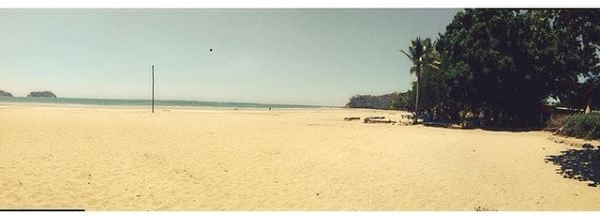
I write as I sit on a prototypical Costa Rican beach. We rest from some grueling, steep and hot riding. It is complete and utter paradise.


This kind of juxtaposition between light and dark has haunted me from the day we entered Central America from Mexico through a small, fucked up Guatemalan border town. What does a small, fucked up border town in Central America look like? Hustlers and hookers roam the streets, at lunch time. Iron on windows and doors. Physical disabilities that the West only sees in text books are everywhere. You can feel the easy drugs, the easy violence in people's careful steps. I like these dirty underbellies of god’s green earth. They remind me that outside of the popular volunteer havens like Antigua not all is rosy with our queer little species.

                                                                                                                photos by Banano

Riding through Guatemala on a bike. What a dream. From day one we call it Guatebeleza. It's immidiately greener compared to Mexico, but in “The Land of Many Trees” not that many mammoth trees are left in the flats along the coast. Mostly I see rubber and sugar plantations. I read up on the history of this land. Juxtapose. I am saddened by our callous nature that we so easily give into. By centuries of subjugation, all too evident today. I ride past a cane field, men harvest it with machetes. No machines, just bone breaking, dusty, unbearably hot work. For a couple of bucks a day. A modern day slave wage. I want to take pictures. But I don’t. It hurts too much to think of all the sugar I have eaten in my life.

But the world is green, even if the road is lined with litter and buzzards track us diligently. The people of Guatemala are stone-faced friendly. You have to ask for their smile, they do not give it as freely as the always welcoming Mexicans.


We ride a brutal mountain up to Lake Atitlan, a true natural wonder of the world, I think at least until I see Lake Nigaragua. Seems like there are Volcanoes sticking out of all kinds of bodies of water in every country that we travel through. And like the Volcanoes, and the impossibly steep roads that we climb daily, the opposites remain. Light and dark. Wealth and poverty. Inheritors of colonial power and Indigina. I imagined the people of Central America to be similar in temperament to Mexicans. But they are harder, more closed off. Years of torture will turn the sunniest disposition into a stony, protective shell.


“Gringo go home”, I hear more than once. I smile back and say that I agree.

I know we can not blame anyone specifically for what happened in Guatemala, El Salvador, Honduras, and Nicaragua. You yell at your granny for buying sugar in the 1950s, when Guatemalans where massacred by the thousands because they had elected a democratic government that tried to re-distribute the land back into local small farmers’ hands for the first time in 450 years. 450 YEARS!!! What would you want your government to do if Massachusetts had been raped, plundered and pillaged for centuries by foreign powers? You can’t call your mom out for buying car tires (rubber) in the 1980’s when El Salvador was sinking into one of the most brutal civil wars in living memory because her people just could not stomach another foreign-sponsored military coup.

Costa Rica got lucky. You know why? It didn’t have any resources. No gold, no silver, no land suitable for large scale, slave-driven, mono-culture cash crops. When Columbus showed up here he called it Rica because he thought it was going to be like all the other places in Central America, a gold mine for his Queen. He was blessedly mistaken. And so it became that Costa Ricans do not have this ugly torturous past forced onto them by one pillaging global power after the other. If you have nothing, you are rich. Instead all the Spaniards showing up here to look for riches had to, OMG, do their own heavy lifting to build a life in the central highlands. This could explain the stronger sense of civic responsibility here.

When I have Wifi, I see what is going on in the Ukraine and Venezuela. These are both rich places, oil in Venezuela and simply the sun on the Crimea for wintery Russians, and have been the focal point of international power struggles for centuries. It saddens me to know that Austria is one of the most important money laundering countries to Russian Oligarchs. We call ourselves a Neutral Country, says so in our constitution, we pride ourselves on standing for peace and justice. But, oh my, “Das ist doch nicht mein Verantwortungsbereich, wo das liebe Geld herkommt”. I am ashamed. I want to return all my passports.

This ugly human thing, this conquest and war for profit, remains a constant since time immemorial, since just after we were hunter gatherers, when suddenly you had rulers, and the ruled. And the justifying classes in between. The ones that would come up with the proper stories for the ruled to blindly fall on their pitchforks, their bayonets, their home-made explosive devices. For the longest times the justifiers used the religions of the world, but now there is only one god left. His name is Mammon. In 10.000 odd years we have not learned. Seldom is a situation as clearly defined between good and evil as WW2, and as long as Hitler was “just” going after the Jews the world didn’t really give a shit either.


What will it take for us to live by inalienable rights for all humans and not just the ones lucky enough to be born in the right place? When will a life be more important than a buck? I wish I had taken the picture of the men harvesting sugar cane. Sweat pouring of their heads, dirty clothes, no shoes. Hacking away at the cane with their broken backs doubled over. I want that picture now, so that you could spill tears with me at the thought of it, and the next time you put three spoons of sugar in your morning cup of coffee.


Saturday, February 8, 2014

mexico


This country would easily win first prize in a competition of the most misunderstood countries in the world. If you opened any US newspaper on any random day in the last 10 years most likely you found a glaring headline about the 10 million illegal immigrants, one or another tropical dis-ease trying to piggyback across the border, and the 80,000 people killed during the real drug war taking place south of the border. Coming from the north into Mexico it’s difficult not to think of the country as a heavily industrialized/militarized front yard to the Promised Land with everyone, including the trucks themselves, trying in vain to cross the border by the millions to reach all that sunny California goodness. Drugs, narco killings, disease ridden illiterate emigrants - a place with those kinds of exports has got to be the front yard to hell, not to the Promised Land. Which explains the horrified faces people made when I told them that I will ride bike through Mexico for a few months. “But it’s so dangerous”! “ Did you get your shots”? “Did you pack your iodine”? “How about that GPS Tracker”?

My personal truth about Mexico: It’s pinche awesome! It has a growing middle class, everybody wants to get more educated and the commerce happening everywhere is astounding. Yes, the income gap is still huge, but the USA better watch out. When the corruption problem is under control, it’s probably on. The Distrito Federal (Mexico City) is a superchingon (super cool) global metropolis and Mazunte in Oaxaca a black hole – plan more days for the Oaxaca coast than you think. And drink more Mescal! We have heard much about the hospitality of Mexico and you will be hard pressed to find a friendlier people. The further south from the border you go, the nicer everything becomes. Even though I would like to, I don’t think I can easily blame that on the USA. It doesn’t just get greener the more south you go, it’s also more developed, cleaner and often with a rich community and civil life thriving around beautiful town centers.

For over 3000 years the central high plateau that contains Mexico City has been the center of empires. One of the first high cultures in the world developed here, and since I am just a little blogger and can sometimes give less of a shit about source validation than the Catholic Church I am just going to say that only the pyramids in Egypt equal Tenochtitlan. Angkor Watt is of course magnificent, but the Khmer were not as focused on scientific advances. An incredibly wealthy and resource-rich society supported the mega projects on which the next three millennia of Mexico were to be built. Including today’s Mexico whose cities are built right on top of the old indigena towns. When the Spaniards were still Moslems (and learning math) the Aztec’s were making perfect celestial calendars predicting planet and star movements thousands of years in advance and into the past. We just don’t understand any of the gorgeous frescos they left us because we haven’t found a convenient dictionary á la Rosetta Stone (the actual rock, not the software).

On some level, gringos understand that there was cultural development here before Cortez and cohorts set hoof and metal clad foot on land in the Caribbean. But most of us probably think that similar to North America the Spaniards were met by hybrid hunter gatherers living a semi-nomadic life with little wealth to be stolen. Instead what he found were several highly developed city states. The fabled Fountain of Youth seemed just around the corner. Since about 400 A.D. these Aztec city states flowered on the ruins of Olmec Tenochtitlan. It would be like the Romans disappearing and the Greeks taking over the place, and then the Spaniards, and so on. Always copying and learning from the culture before.

Apart from thinking that Cortez was a god (proving again that religion is just never good for ya) the Aztecs lacked some crucial inventions and many disease vectors. Lethal disadvantages in global colonial politics. Very quickly the Old World concentrated on parts south of the Rio Grande to achieve worldly and heavenly glory. Spain and Portugal continued the largest genocide in human history in Latin America with a vengeance. Logically, they must have thought that there is more plunder in the grand cities of Central America compared to the roving bands of the North. The thievery of humans, gold and other unique materials (rubber, sugar) was awkwardly justified with a completely fucking ludicrous idea that the savages were actually profiting from all this. Mostly by gaining entrance to heaven, posthumously, you understand. The biggest and best brains in the just about enlightened world left us with marvels such as this one from Voltaire “Latin America is inhabited by lazy and stupid Indians who live side by side with pigs with navels on their backs and bald and cowardly lions.” Want more? Bacon, Hume and Montesquieu declined to recognize the “degraded men” of the new world as human beings. Father Gregorio Garcia managed to proof Semitic blood in the native population in the 17th century. Even for the Jewish diaspora this is quite an accomplishment. Maybe the Holocaust should not have come as a surprise.
               
So one day the heathen-killing, dis-ease ridden, illiterate white man arrives on the shores of this paradise. Takes your women (in your own house), makes your children his slaves for his death trap mines, sends your sugar to Europe and shows you that your gods suck by killing you if you don’t agree. Unfortunately, that was par for course when superior and inferior powers met during colonial times. 500 years later we witness the results. A nation slowly climbing out of the depths of poverty, crossing themselves every time they walk past a church. Symbols of absolute might built with the riches from the bellies of the Guanajuatos and Zacatecas of the new world. Gilden Cathedrals erected on the backs of enslaved indigenas. The argument that the industrial revolutions of the world, enabling today’s high western standard of living, were financed with the wealth stolen from the Open Veins of Latin America does not seem completely silly.

When a gringo tourist walks through a pleasant Mexican Zocalo today the church on one side of the square is the only edifice remaining from colonial times that is available for public use. If I were a local I’d throw eggs when I see what is left of my country’s heritage and wealth instead of crossing myself. Since the new Latin American (!) pope seems so focused on asking his colleagues in world leadership to create a more egalitarian global economic order maybe he could go to the next meeting in Davos and invest some of the billions that the church stole from Mexico in the last 500 years in education for Mexico’s poorest. So that those 10 million illiterate emigrants have a chance to succeed in their own country instead of having to cross a deadly desert into the pope’s apparently cold capitalist world.

Now let me ask you a question. If a country has had continuous civilizational development for thousands of years, creating marvels of science along the way, what does that make it? That’s right, China. The country that brought you noodles, paper and porcelain. Illustrious company for Mexico, you would think? As countries go, just a tad cooler than the sweetheart up north who gave you The Little Big Boy. And yet, we still stick to our arrogance, like our colonial forefathers, thinking that Central America is a dangerous yet pitiable place. This sentiment is couched in concern now, rather than racial superiority.

After 500 years of slavery, pillage and, finally, Herr Kissinger’s “Real Politik” a strong indigena element remains. In many of the small towns we rode through on our bicycles people present a different appearance than in the next one. Different skin shades, different facial bone structure, taller, shorter, fatter, skinnier, different clothes and different dialects. This genetic and cultural strength after centuries is extraordinary in a western world of mongrelizing mix and match. I for one am happy to be greeted by Mayan and Aztec faces, even though it twists my tongue into knots to call them by name.

Although this painful history has lasting impacts deep into Mexico’s present understanding of itself it seems that the country is moving in a good direction. I am sure to some this sounds like a naïve statement. I’ll defend it by saying I spent four months riding my bicycle through Mexico, meeting locals everywhere we went. Sleeping at the Red Cross, the Fire and Police Stations, Municipal Halls, Municipal Gyms, Restaurants, Hotels, Mescal Makers on roofs of Paleterias (ice cream shop) between the two borders. Countless Capoeiristas in towns all over shared their stories, ideas and thoughts.

Development, democrazy and civil society take time. Many countries in the world did not take these steps easily, gently or quickly. Being neighbor to the world’s single super power is one of the most difficult positions to be in because interests will often conflict. And what then? Pinche Gringos.

So Mexico, please be patient with yourself. Rome was not built in a day. Especially considering your oft brutal history. Austria fought a slow fusion civil war for twenty years between the two World Wars. Cut yourself some slack. The USA’s bloodiest war was its own civil war. Life seems to be, like riding your bicycle, a marathon.

And stop warning my about the dangers to the south of you, for example Guatemala. It makes you sound like a Gringo.

Tuesday, November 26, 2013

Reise nach Afrika

Reise nach Afrika - Journey to Africa. This song takes me back to my childhood days. Rolling around the Vienna of the 70s as a kid. My pops with flared pants, patched in whack places because we were broke and he always rode bike and mom always patched our pants. My mom with short hair and flowery hippy dresses. They would take my brother and I to these hippy commune houses. Big ol' central European apartment buildings, 4 stories high, lives living in the memory of thick brick walls. Walls that keep you warm when its cold out and cool when its hot. Summer concerts in square, jungle green court yards with hippy bands singing meaningful songs against nuclear power and for love. You'd have to be a monster to disagree with that sort of sentiment, no?

There are not many things that I bring along from my past. I have a beany my mom made me 25 years ago. I still have a belt I bought in 1992, because I like it. These childhood memories, these pasts, live in our minds. I pay as little attention to them as possible though so that I may be present. Maybe that is why I carry little. An attempt to match the mind to earthly possessions. Or vice versa.

But music stays with us. And few songs stay with me as the ones about traveling and freedom. Arik Brauer is a distinguished constant in Austrian post World War 2 art. I can only think of one thing more important than his work in painting, writing and music; his sweet, harsh tongue lashings for the fat cat in all of us. The envious, stingy and arrogant self. The one that we hopefully battle every day. Do you stick your head in the sand? I know I have to pull it out frequently.

Yet Reise nach Afrika is apolitical and sweetly politically incorrect. And when I find open road this past in a song rings out in joy. I want to sit my butt on a bike and start riding without turning around. I want to keep seeing what is beyond the next turn I want to drink from all the rivers of this earth. That's what the song is about. Riding a bicycle to Afrika, past the Bedouins, through that dark, mysterious continent, riding so far that only the dirt keeps us corporeal. An escapist dream.

The song went on autorepeat in my music players after I sent my application letter to Mestre. It stayed there. On the prettiest B2B downhill joyrides it bursts out of me. When I leave good new friends behind these words comfort me. Straight ahead is the road. It is today. It is now.

Thursday, October 17, 2013

one year before B2B

One year ago I barely grasped that Capoeira might not be just another martial art. Mestres keep talking about how Capoeira is like life, life is like Capoeira. But when I tried to esquiva (a dodging maneuver in Capoeira) my next deliverable at work my boss just laughed at me. Right now I try to remember every day that I know nothing. Which is probably a good starting point for any human endeavor. 

Saying that Capoeira is like life and that life is like Capoeira draws two kinds of responses from an audience. Head-nodding agreement and blank stares of incomprehension. Now I know that this will happen most times when Capoeiristas and none-Capoeiristas discuss Capoeira. But The Now is not the topic of this topic Herr Tolle. Instead you should know that back then I did not think that I could just join a journey such as Mestre Acordeon's. You would be justified to expect Mestres, Contra Mestres and players with their books written full of stories about life and Capoeira to be polishing their bikes, packing their survival gear and reading up on how exactly Montezuma's revenge affects the digestive tract of white people.

So I looked on in envy how Mestre and his group started to prepare. I even knew one Capoeirista out of Salt Lake City who was going to try go on the trip. Bebum, who trains with Mestre Jamaika at Volta Miuda. Every day I trained my butt off with Professor Fenix's Grupo Candeias in Seattle's International district to become better in all aspects of this complex art form. Every day I went to a job that had become stale, not because the work or the group I was in was bad, but rather because I seem to require constant fresh and interesting input. Most jobs don't provide that. Once you figure them out, you go on auto pilot.

I had moved to Seattle on another Software Localization Contract, my 5th,  in 2009 right after a six month trip around the world. I was hoping to go to Marocco for at least as long afterwards. I thought I was going stay 8-12 month before going to Africa but then the pesky world economic crises made me face reality for once and I decided to take the full time job that Microsoft generously offered while Paulson called the Hammer down on 99% of us. You want to know about the fulltime job? Mom was happy. I was feeling old. I did love the challenges of working in that Type A personality zoo called Microsoft. And settling into Seattle was like traveling to a new country for me because growing roots was definitely a new experience.

Seattle grew on me like moss on a rock. Tim Robbins, a native, provides ecclectic if slightly whack imagery if you'd like some nice descriptions of that rather moist part of the world. I liked it. It seemed, for a short while at least, that it could break a certain rythm that constant moving had established. After I went to Australia from my homeland Austria in 1995 to attend University for three years I flew to Tokyo on a one-way ticket with 50 bucks in my pocket and ended up staying for two years. Met a girl there and moved to Hawaii in 2000 before finally arriving on the West Coast and living all up and down that amazing part of the world. I had been a waiter, a barrista, a night club party organizer, a bar tender, a florist, an event planner, a stage builder, an orchid small business owner, a translator, a computer localization tester, engineer, project manager and finally in my last job a Release Manager on the Windows Phone Team. Only in America is it possible to move from working a 4AM to noon minimum wage job in the Downtown Los Angeles wholesale flower market to working a badass job in one of the most successful companies in the world. The USA, like most countries, has many good and bad sides. But it is uniquely great in that sense. 

Yet still, it is not enough. I really wanted to go ride bike.